

The home cook’s guide to za’atar: what it is, recipe variations, how to use it, and my go-to homemade spice blend.
Za’atar (pronounced zaah-tar) is a beloved spice blend most commonly associated with Middle Eastern and Mediterranean cooking. Earthy, tangy, nutty, and deeply aromatic, it’s a pantry staple that instantly elevates your home cooking.
One important thing to know right away: there is no single, official za’atar recipe. Every blend you buy (or make) will be slightly different, shaped by regional traditions, personal preferences, and ingredient availability.
What’s in Za’atar?
While recipes vary, most za’atar blends share a common backbone:
- Thyme (or a close relative)
- Sesame seeds, toasted for extra flavor
- Sumac, which adds a signature tangy, lemony note
Beyond that, za’atar is shaped by regional traditions and personal preferences. Depending on where it’s made, the blend may include additional herbs like marjoram or mint, or spices such as cumin and coriander. Lebanese versions often lean heavily on sumac and may even include a hint of orange zest, while Palestinian blends sometimes feature caraway. These choices affect not only the flavor but also the color of the mix: za’atar is most commonly green, but it may also appear more reddish when it’s heavier on sumac and spices. I like to land somewhere in between.
A Note on Traditional Ingredients
The most traditional za’atar recipes use hyssop, a form of wild thyme native to the region. Unfortunately, it’s nearly impossible for me to find where I live, so I substitute with good-quality dried thyme and oregano. While not identical, this combination gets very close in flavor and works beautifully in everyday cooking.
Fun fact: In Arabic, the word za’atar refers to both the herb thyme and the spice blend. So if you’re shopping and not paying close attention, you might accidentally come home with plain old (still delicious!) thyme instead of the blend you were expecting. Consider this your friendly warning!
Why I Make My Own Za’atar
While I do occasionally use store-bought za’atar, I prefer making my own. It’s the best way to ensure the balance of flavors is exactly how I like it—and to know precisely what’s in the mix.
Many commercial blends include salt (often in unknown quantities), which can make it tricky to use generous amounts without ending up with an overly salty dish. I leave salt out of my homemade za’atar entirely and season dishes separately as needed. For me, this offers much more flexibility in the kitchen.
If you’re buying za’atar, look for good-quality versions at Middle Eastern or Mediterranean grocery stores, spice shops, or organic markets. Be cautious with very cheap blends, which may substitute ingredients like citric acid for sumac or include fillers such as flour.
What’s in My Homemade Za’atar Blend
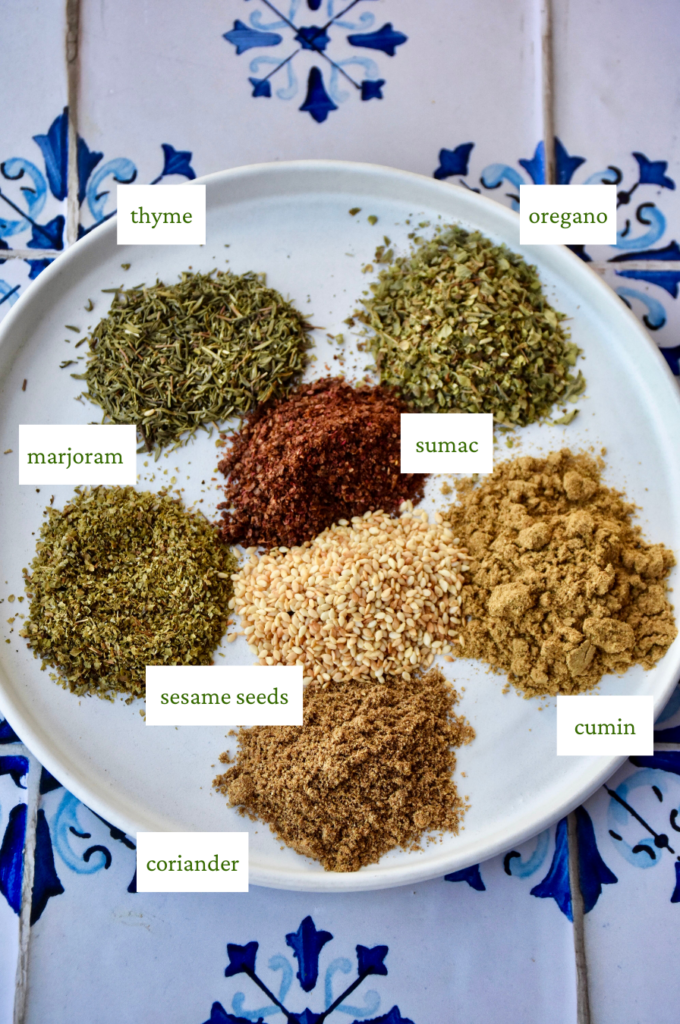
When I make za’atar at home, I aim for a balanced, aromatic blend of herbs and spices. Here’s what I include: thyme, oregano, marjoram, cumin, coriander, white sesame seeds, sumac, and optional red pepper flakes.
How I Use Za’atar: My Favorite Recipes
Za’atar is one of my go-to herby spice mixes to spruce up just about anything. I use my homemade blend in all of my recipes where za’atar is listed as an ingredient, but feel free to use your favorite version.
Some of my favorite ways to use it:
- Vegetarian shakshuka
- Mixed with olive oil and soaked up with fresh bread

Za’atar Spice Blend
Ingredients
- 1 Tbl white sesame seeds
- 1 Tbl dried thyme
- 1 Tbl dried oregano
- 1 Tbl dried marjoram
- 1 Tbl ground cumin
- 1 Tbl ground coriander
- 1 Tbl sumac
- ¼ tsp red pepper flakes (optional)
Instructions
- Toast the sesame seeds on a dry skillet over medium-low heat, stirring often, until golden.
- Add all of the ingredients to a jar. Shake well.
Notes
Did you make this Za’atar Spice Blend?
Please let me know how this recipe turned out for you! Leave a comment below and tag @jessicahomekitchen on Instagram.