

This butternut squash lasagna with cider-braised onions, béchamel, and taleggio is a cozy, satisfying vegetarian meal for fall and winter.
Why You’ll Love This Butternut Squash Lasagna
When the cozy meal cravings start to take over, this butternut squash lasagna delivers everything you want in a comforting fall or winter dish:
- Seasonal produce shines: Butternut squash is the heart of this recipe—roasted to deepen its natural sweetness and flavor, then mashed into a silky purée.
- Elevated comfort food: This lasagna is indulgent and cozy, yet multidimensional and balanced. The béchamel and taleggio add rich, melty creaminess. The roasted squash brings subtle sweetness, with fresh thyme to keep the flavors earthy. The cider-braised onions add warmth, texture, and a unique complexity, while being less sweet than traditional caramelized onions.
- A hearty vegetarian meal: This vegetarian lasagna satisfies everyone at the table, including meat lovers. It’s filling, flavorful, and even packs some protein thanks to the cheese. It makes a standout main dish for cold weather dinners and holiday meals.
- Make-ahead and freezer-friendly: You can prepare each component ahead of time or assemble the entire lasagna and store it in the fridge or freezer.
A Closer Look at the Ingredients
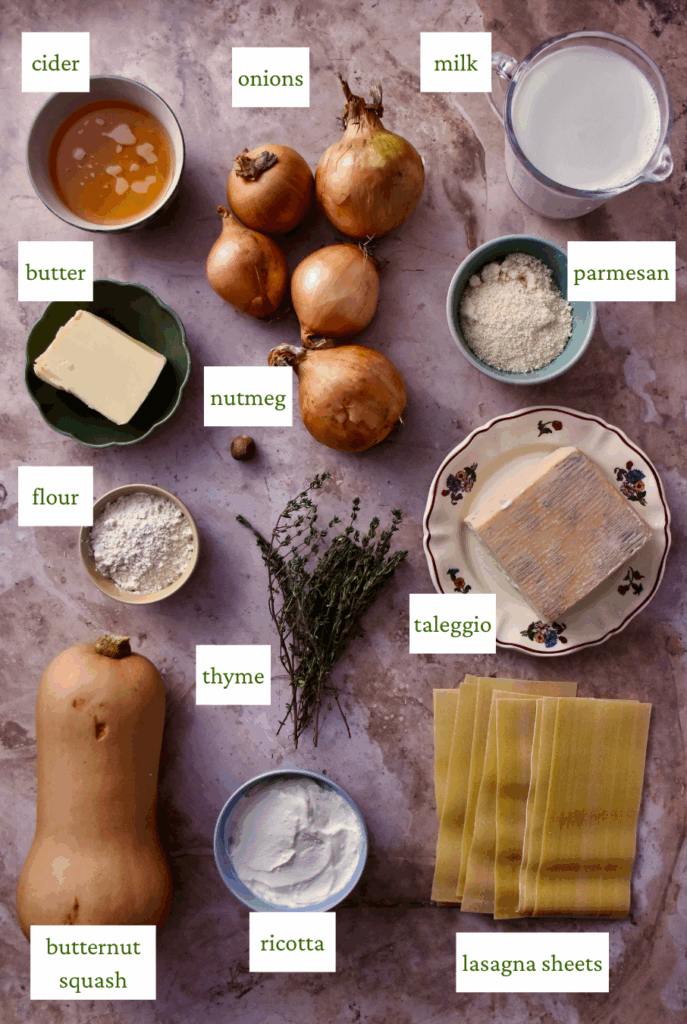
Ingredients for the Cider-Braised Onion Layer
- Yellow onions: The classic choice for cooking. I’ve tried red onions, but yellow onions give the best flavor and color for this lasagna.
- Hard cider: Braises the onions and infuses them with flavor. I prefer drier ciders. If necessary, you can substitute non-alcoholic unsweetened apple cider or apple juice, plus a splash of apple cider vinegar.
- Salt: Helps draw out moisture so the onions soften and sweat.
- Butter: I like to use unsalted butter. You can substitute with olive oil.
Ingredients for the Butternut Squash Layer
- Butternut squash: Use whole, rather than pre-cubed, squash.
- Fresh thyme: Adds a subtle earthy and floral note. If you don’t have fresh, you can substitute with half the amount of dried thyme, Italian seasoning, or Herbes de Provence.
- Ricotta: Provides structure to the layer, helping it hold its shape, while adding creaminess and a protein boost.
Ingredients for the Béchamel Layer
- Butter + flour: Forms the roux, which thickens the milk into a creamy sauce.
- Milk: Whole milk gives the richest flavor, but low-fat works too.
- Nutmeg and salt: Classic seasoning for the béchamel. I prefer grating whole nutmeg, but pre-ground is OK.
And of course, cheese and pasta!
- Taleggio: A semi-soft, washed-rind Italian cow’s milk cheese that melts beautifully. Strong-smelling but mild, creamy, and buttery in flavor. If unavailable, fontina is an excellent (and slightly milder) alternative.
- Parmesan: Topping the lasagna with grated parmesan adds umami and helps the lasagna brown beautifully on top.
- Dry lasagna sheets: I use regular, flat, dry noodles (like Barilla). No boiling required, since the layers have enough moisture for the noodles to cook in the oven.
An Overview of the Cooking Process
This butternut squash lasagna recipe has a few moving parts. They are mostly hands off and the timing works out beautifully.
- Start by preheating your oven to 400°F (200°C) conventional heat or 375°F (185°C) fan.
- While the oven heats, begin the braised onions. They take about an hour to cook low and slow. By the time they’re done, you will have finished preparing the other components of the recipe.
- Once the onions are gently cooking, prepare the butternut squash. While its roasting, take a few minutes to prep the remaining ingredients: strip the fresh thyme, measure out the ricotta, and cube the taleggio.
- Next, make the béchamel sauce. Once smooth and finished, remove it from the heat and cover it with plastic wrap directly touching the surface .
- Once the butternut squash is done roasting, mash it and add the ricotta, thyme, salt, and pepper.
- At this point, everything is ready for assembly. Assemble the lasagna as follows:
- A very thin layer of béchamel on the bottom of the dish
- Repeat three times: one layer of lasagna sheets → butternut squash purée → braised onions → taleggio → béchamel
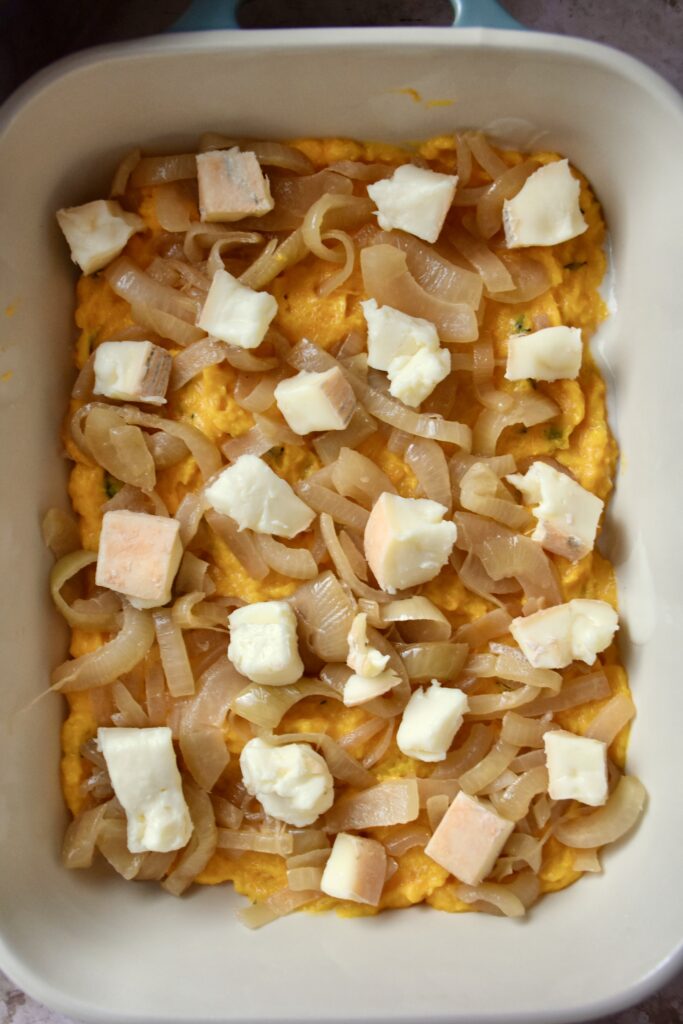
- Finish with a generous layer of grated parmesan
- Cover the dish tightly with aluminum foil and bake on the middle rack for 30 minutes. Remove the foil and return the lasagna to the oven for another 15 minutes, until bubbling. Finish under the broiler for a few minutes, watching closely, until the top is beautifully golden.
- Let the lasagna rest for at least 10 minutes before slicing. This helps the layers set and makes serving much easier.
How to Braise Onions in Cider
What is braising?
Braising is a two-part cooking method that builds deep flavor and tenderness.
- Dry heat: You first sauté the ingredient in fat to develop flavor through the Maillard reaction (browning = flavor).
- Moist heat: Then you gently simmer it in liquid until soft and infused with whatever you’re cooking it in—in this case, cider.
Step-by-Step Instructions for Braising Onions
- Use a large, wide pan (about 12 inches / 30 cm) to give the onions enough surface area.
- Trim the ends of the onions. Slice the onions by halving them lengthwise, placing each half cut-side down, and slicing ¼-inch (½-cm) half-moon slices. Separate the layers.
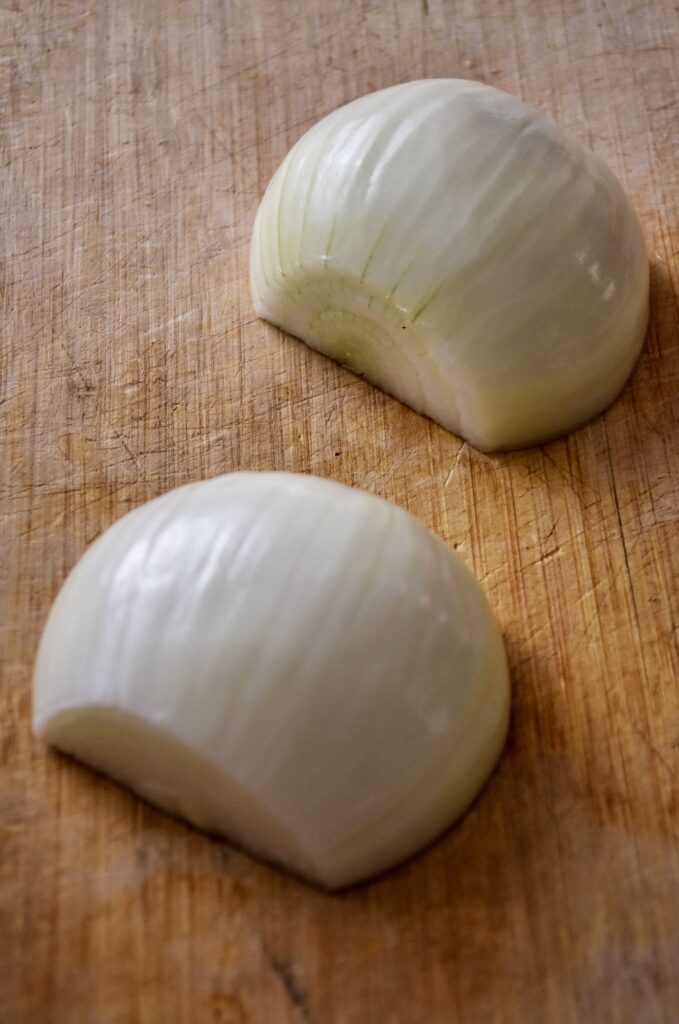

- Melt the butter in the pan over low heat, then immediately add the onions and increase to medium heat. Cook for about 5 minutes, stirring often, until they begin to soften and release their natural sugars.
- Reduce the heat to medium-low (gentle simmer), sprinkle with salt, and pour in the cider. Let the onions gently simmer for about 1 hour, stirring occasionally. The onions should be pale and soft – not like caramelized onions.
- Add a splash more cider if the pan looks dry and the onions start sticking.
- Lower the heat to low if the onions begin to brown too quickly. You want a slow, steady braise.
How to Make Silky Smooth Butternut Purée
This butternut squash purée does a lot of heavy lifting in the lasagna. It adds a creamy texture, gentle sweetness, and beautiful golden color. Along with the béchamel, it also brings enough moisture to properly hydrate the pasta layers as the lasagna bakes.
Step-by-Step Instructions for the Butternut Squash Purée
- Place a baking sheet in the oven and preheat to 400°F (200°C) conventional heat, or 375°F (185°C) fan setting. You can line the sheet with aluminum foil or leave it bare; both work well and encourage maximum caramelization.
- While the oven heats, cut the butternut squash in half lengthwise and scoop out the seeds. Drizzle the cut sides lightly with olive oil and rub to coat evenly.
- Carefully remove the hot baking sheet from the oven and place the squash halves cut-side down on the pan. Using the tip of a knife, poke a few holes in the skin to let steam escape and help the squash cook faster.
- Return the baking sheet to the middle rack of the oven and roast for 45 minutes. The skins should look blistered, and a butter knife should slide easily through the flesh. If there’s any resistance, put the squash back in the oven.
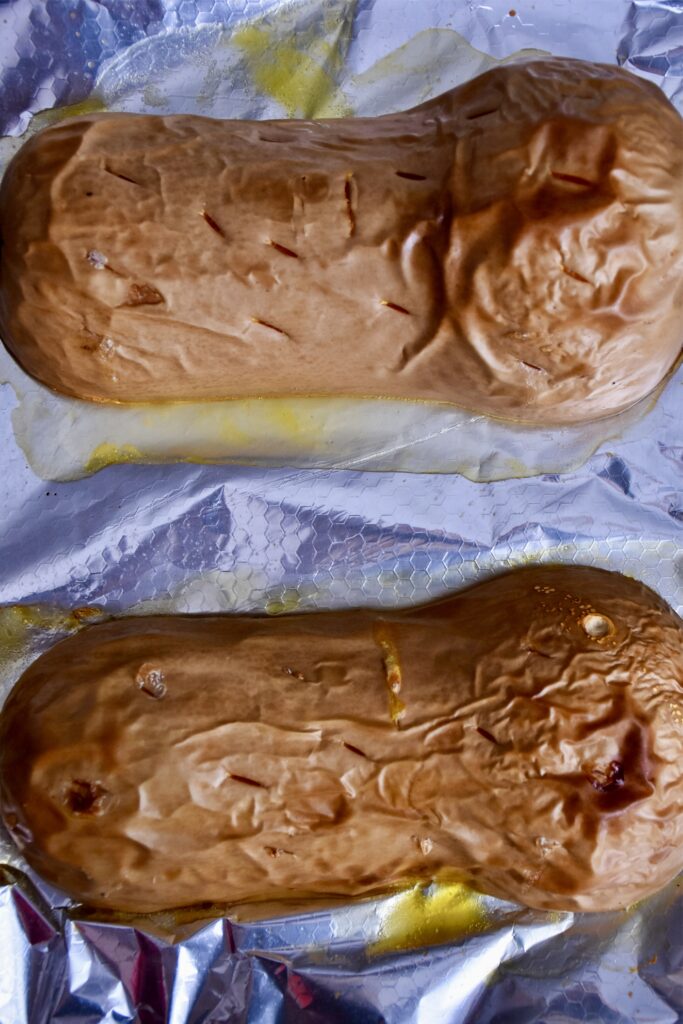
- Let the squash cool slightly so it’s safe to handle. Remove and discard the skin—either by peeling it away while the squash is still cut-side down, or by flipping the squash over and scooping out the flesh with a spoon. Transfer the flesh to a medium mixing bowl.
- Mash the squash with a fork or potato masher until smooth.
- Add the ricotta, thyme, salt, and pepper, and mix well until fully combined.
Notes on Alternative Methods for Making Butternut Purée
During recipe testing, I tried making the butternut squash purée three different ways: cubed and roasted, cubed and steamed, and halved and roasted. Roasting the squash in halves was the clear winner.
- More flavor than steaming: Roasting allows the squash to brown where it meets the hot pan, enhancing its flavor and natural sweetness.
- Creamier texture than cubing: While cubed squash caramelized in more spots, the final purée was thicker and slightly uneven. The crisp edges made it harder to mash smoothly, and I had to add milk to loosen it. Even then, I found that the purée did not properly hydrate the pasta layers.
- Better timing: The roasting time for halved squash lines up nicely with the time it takes to cook the onions, making for a convenient overall workflow.
How to Make a Foolproof Béchamel Sauce
What is béchamel?
Béchamel is one of the five classic French “mother sauces.” It’s made by whisking milk into a white roux (equal parts butter and flour) until thick and silky. You’ll find it in dishes like French gratin dauphinois, traditional Italian lasagna, and Greek moussaka.
What are the perfect proportions for béchamel?
For a classic béchamel, the butter and flour should be equal by weight, not volume. Then use roughly 10 parts milk for every 1 part roux.
For this recipe, that looks like: 60 g butter, 60 g flour, 60 cl milk.
Or in US volume equivalents: 4 tbsp butter, ½ cup flour, 2½ cups milk.
Step-by-Step Instructions for Making Béchamel
Béchamel might sound intimidating, but I promise it’s beginner-friendly. After you’ve made it once, you’ll wonder why you ever avoided it. Here is my foolproof method:
- Prep first: Measure everything before you start because béchamel moves quickly. I recommend using cold (not warm) milk; it helps prevent lumps and yields a smoother sauce.
- Make the roux: Melt the butter in a large saucepan over medium-low heat and wait for it to start foaming (do not allow it to brown). Add the flour and whisk until smooth. Continue whisking for about 3-5 minutes until small bubbles appear and the mixture is pale, silky, and smells slightly toasty. This cooks off the raw flour taste.
- Add the milk gradually: Remove the pan from the heat. Add a small splash of milk and whisk until completely smooth. Add the remaining milk in two additions, whisking smooth after each addition. (If you’re increasing the scale of the recipe, you can add the milk in more additions.)
- Thicken the sauce: Return the pan to medium-low heat, maintain a light simmer, and cook for about 10 minutes, whisking often, until the sauce thickens enough to coat the back of a spoon.

- Season: Remove from heat and season with salt and a pinch of nutmeg. The nutmeg should be present but subtle.
- If making ahead: Press plastic wrap directly onto the surface of the béchamel to prevent a skin from forming. It will thicken as it cools, so whisk in a splash of milk to loosen it when reheating.

Butternut Squash Lasagna with Cider-Braised Onions
Equipment
- 1 large sauté pan (for the onions)
- 1 metal baking tray (for the butternut)
- aluminum foil
- 1 medium pot (for the béchamel)
- 1 medium mixing bowl
- 1 glass or ceramic baking dish (10 x 8 inches | 27 x 20 cm)
Ingredients
Onion Layer
- 2 Tbl unsalted butter (30g)
- 4 medium onions (halved and sliced)
- ½ tsp salt
- 1 cup alcoholic cider (25 cl)
Butternut Layer
- 1 butternut squash (3 lbs / 1.5 kg, halved lengthwise and seeds removed)
- drizzle of olive oil
- 1 cup whole milk ricotta (250g)
- 1 Tbl fresh thyme
- salt and pepper to taste
Béchamel Sauce
- 4 Tbl unsalted butter (60g)
- ½ cup all purpose flour (60g)
- 2½ cups whole milk (60 cl)
- pinch of freshly grated nutmeg
- salt and pepper to taste
For Assembly
- 9 dried lasagna sheets (adjust quantity as needed)
- ¾ lbs taleggio cheese (350g, cubed)
- handful of grated parmesan
Instructions
- Place a aluminum-lined baking sheet in the oven and preheat to 400°F (200°C) conventional, or 375°F (185°C) fan.
- Prepare the onions:Separate the sliced onion layers. Melt the butter in a sauté pan over low heat, then add the onions and increase to medium. Cook for 5 minutes, stirring often.Reduce heat to medium-low, season with salt, and add the cider. Simmer gently for about 1 hour, stirring occasionally. Add a splash more cider and lower the heat if the onions stick or brown. The onions should be pale and tender.
- While the onions are braising, prepare the butternut squash:Drizzle the cut sides of the squash with olive oil and rub to coat. Carefully remove the pre-heated baking sheet and place the squash cut-side down. Prick the skin a few times with a knife.Cook in the middle of the oven for about 45 minutes, until the skin is blistered and the flesh is very tender. Let cool slightly, then discard the skin and transfer the flesh to a bowl. Mash until smooth. Mix in the ricotta, thyme, salt, and pepper until fully combined.
- While the butternut is roasting, make the béchamel:Melt the butter in a pot over medium-low heat until foaming (do not brown). Add the flour and whisk until smooth. Cook for 3–5 minutes, whisking constantly, until pale, silky, and lightly toasty.Remove from heat. Add a small splash of milk and whisk until smooth, then add the remaining milk in two additions, whisking well after each.Return to medium-low heat and simmer gently for about 10 minutes, whisking often, until thick enough to coat the back of a spoon. Remove from heat and season with salt and a pinch of nutmeg.Press plastic wrap directly onto the surface and reserve.
- Assemble and cook:Spread a very thin layer of béchamel in the bottom of the baking dish. Repeat the following layers 3 times: lasagna sheets → butternut squash purée → onions → taleggio → béchamel. Finish with a generous layer of grated parmesan.Cover tightly with aluminum foil and cook in the middle of the oven for 30 minutes. Remove the foil and bake for 15 minutes more, until bubbling. Broil briefly, watching closely, until golden.
- Let rest for at least 10 minutes before slicing.
Did you make this cozy butternut squash lasagna?
Please let me know how this recipe turned out for you! Leave a comment below and tag @jessicahomekitchen on Instagram.