
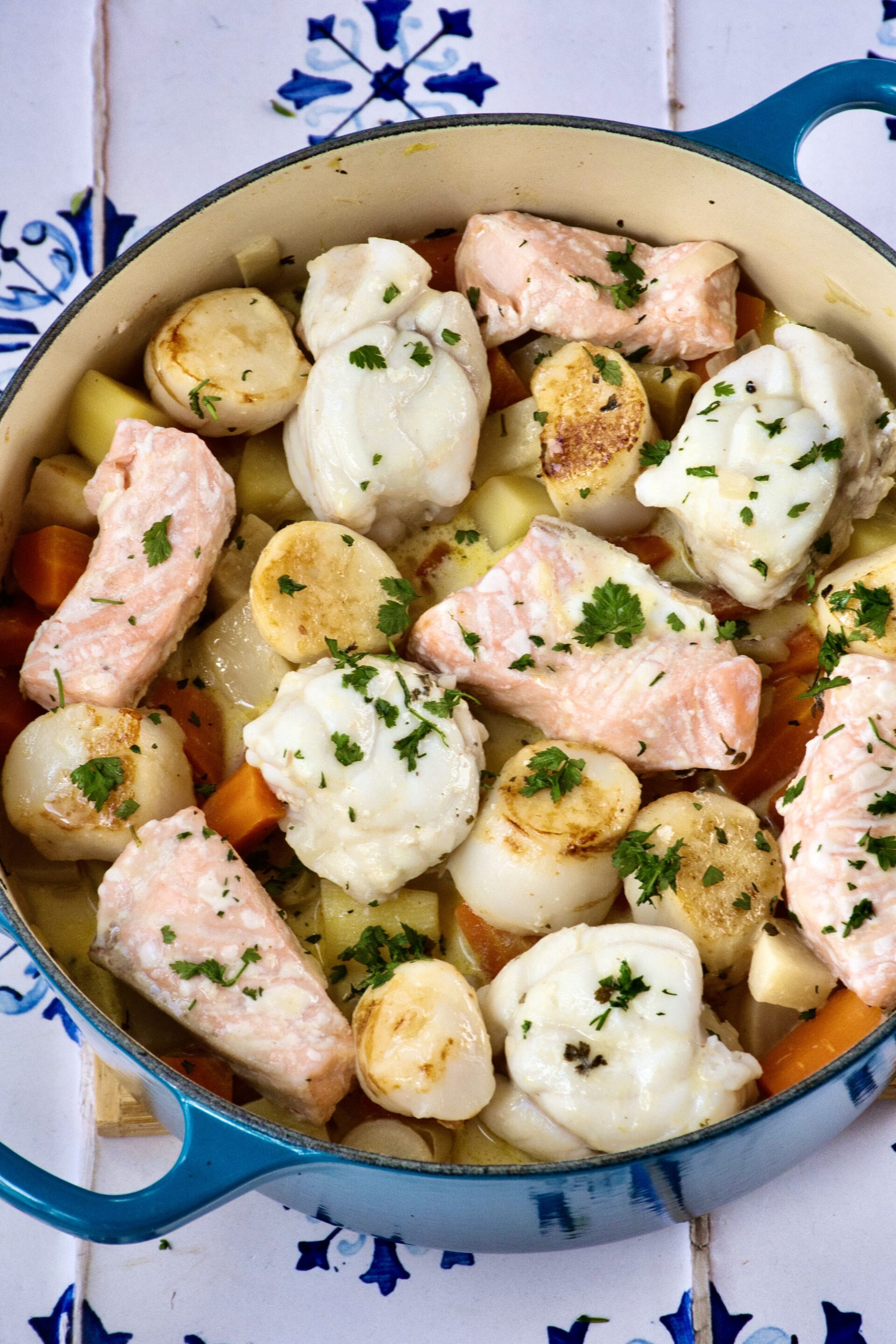
This traditional Flemish fish stew, known as Waterzooi, is a creamy, comforting dish from Ghent with fresh fish, vegetables, and an aromatic broth.
Waterzooi: The Perfect Fall and Winter Fish Stew
One of the first dishes my boyfriend ever made for me was Waterzooi, a creamy, comforting fish stew that quickly became a favorite. He grew up in Lille, a city in northern France under 1 hour away from Ghent, the Belgian city where this dish originated. Over the years, we’ve had the chance to taste different versions in local restaurants and perfected our own at home — and we’re excited to share everything with you.
Why you’ll love this fish stew:
- One-pot, fuss-free cooking
- Creamy but light
- Rustic and beautiful on the table
- A full, satisfying meal
Fun fact: Waterzooi was originally made with freshwater fish from the rivers around Ghent, such as pike, perch, and eel, but today it’s often made with saltwater fish or even chicken.
A Closer Look at the Ingredients
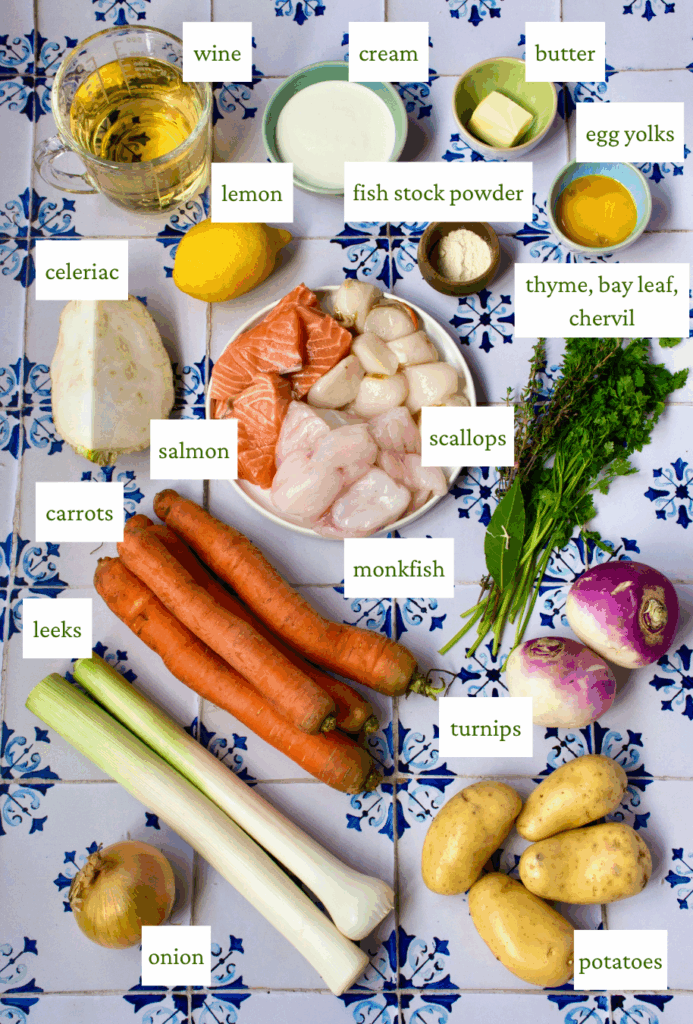
Fish
- Using a variety of fish makes this stew more flavorful and visually appealing. I love combining salmon fillets, monkfish, and scallops. Other great options include mussels, cod, turbot, halibut, or trout. Avoid very thin cuts of fish. If using scallops, which cook very quickly, I recommend sautéing them separately in butter for the best texture—more on that later.
Veggies
- Carrots, turnips, celeriac (celery root), leeks, onions, and potatoes form the hearty foundation of this fish stew. These classic fall and winter vegetables are staples of French rustic cooking and often appear in dishes like pot-au-feu. I personally prefer the taste and texture of celeriac over branch celery in this recipe. While you only need about a quarter of the celeriac for the stew, the remaining portion can easily be put to good use in a soup or coleslaw.
- Butter: Used to soften the onions and sauté the other vegetables.
Cooking liquids
- Fish stock: This is the ingredient that elevates Waterzooi from good to extraordinary. I used to make it with vegetable stock, but switching to fish stock transformed the dish into an aromatic delight. Homemade fish stock delivers the richest, most flavorful result, as is usually the case with broths. Store-bought options include bottled or boxed seafood stock (often made from fish heads and bones) or powdered versions you can dilute with water. In a pinch, mix some clam juice with vegetable stock.
- White wine: Over half a bottle of dry white wine added to the fish stock brings depth and a touch of acidity that balances the richness of the cream and egg yolks. The alcohol cooks off.
Finishing touches
- Egg yolks and cream: This classic French liaison transforms the broth into a velvety, pale sauce. Because the temperature is carefully controlled, the yolks thicken and slightly cook without scrambling. The yolks also emulsify the butter, cream, and stock, keeping everything smooth and unified.
- Fresh lemon juice: Added at the end to brighten the flavors, without making the dish overtly lemony.
- Parsley or chervil: These delicate herbs are used both during cooking and as a finishing touch. Chervil, a feathery herb in the parsley family, releases a mild, sweet, slightly anise-like aroma when simmered, enriching the broth even if the herb itself doesn’t remain fragrant. Sprinkling extra chervil or flat-leaf parsley at the end adds freshness, aroma, and a pop of green.
- Thyme and bay leaf: A simple bouquet garni, aka thyme branches and bay leaf tied together with kitchen twine, infuses the broth with subtle herbal notes.
How to Make My Fish Stew (Plus Tips and Tricks)
Prepare the vegetables
Peel the carrots, turnips, celeriac, and potatoes. For the celeriac, you can use a peeler for the thinner outer layer, but it’s often easier to trim the tougher parts with a knife — you won’t waste much, and it’ll save you frustration. Cut all the root vegetables into large, even cubes (about 1-1 ½ inches or 3-4 cm).
Trim off the dark green parts of the leeks, then slice the white and light green sections into thick rounds. If they’re sandy, rinse them well under running water.
You can reserve the cubed vegetables in the same bowl to make space on your cutting board, since they will be added at the same time.
Peel and finely chop the onions (which will be added before the other veggies).
Sauté the vegetables
Melt the butter in a large Dutch oven or pot over medium-low heat. Add the onions as soon as the butter melts — don’t let it brown. Sauté for about 5 minutes, until they’re soft and pale blonde. The goal here is sweetness and tenderness, not color.
Add the remaining vegetables, season with salt and pepper, and stir well to coat. Cook for about 10 minutes, stirring occasionally, so they release their natural sugars and soften slightly.
Simmer the vegetables with broth and wine
Pour in the fish stock and white wine. Add the herbs: a few thyme branches and a slightly torn bay leaf tied together with kitchen twine, as well as chopped chervil or parsley. Stir to combine.
Bring the liquid to a gentle boil, then immediately reduce to a simmer (you should see small, regular bubbles). Cover and cook for about 30 minutes, stirring occasionally, until the vegetables are tender when pierced with a butter knife. Taste and adjust the seasoning as needed.
Remove the thyme and bay leaf bouquet once done.
Cook the fish fillets
Cut the fish fillets into 2–3 inch / 5-7 cm cubes and arrange them on top of the vegetables. Cover and let them steam for about 8-10 minutes, until the fish is opaque (an internal temperature of around 130°F / 55°C).
Sear the scallops
If adding scallops, cook them separately in butter when the fish is almost done steaming. Heat a generous knob of butter in a stainless steel pan over medium-high heat. Add the scallops without crowding the pan and cook undisturbed for 2–3 minutes until golden brown on the bottom. Flip and cook for another 1–2 minutes. Scallops are done when they’re opaque and springy (internal temperature of about 130°F / 55°C).
Finishing touches
Carefully remove the fish with tongs or a spatula and set aside on a plate.
In a small bowl, whisk together the egg yolk, cream, and lemon juice. To temper the mixture (so the yolks don’t curdle), slowly whisk in about 1 cup or soup ladle of the hot broth— this gently raises the temperature of the yolks without cooking them. Then, pour the tempered mixture back into the pot in three additions, stirring well after each one. The broth will turn silky and slightly thicken. Taste and adjust seasoning.
Return the fish to the pot for a pretty presentation. Or for more practical serving, spoon the vegetables and sauce into bowls and place the fish on top. Drizzle sauce on top of the fish. Garnish with a sprinkle of fresh chervil or parsley for a bright, elegant finish — and serve right away to your very lucky guests!
Traditional Fish Stew From Flanders (Waterzooi)
Equipment
- large Dutch oven or pot with cover
Ingredients
- 1½ Tbl butter (20 g)
- 1 onion
- 4 medium carrots
- 2 turnips
- ¼ of a medium celeriac
- 4 yellow or yukon gold potatoes
- 2 leeks
- 1 cup fish stock (25 cl)
- 1 ⅔ cups dry white wine (40 cl)
- 2 Tbl packed chopped parsley or chervil
- a few fresh thyme branches
- 1 bay leaf
- 10 oz salmon fillet (280 g, skin removed)
- 10 oz monkfish (280 g, skin removed)
- 10 scallops
- 2 egg yolks
- ¾ cup full-fat liquid cream (20 cl)
- 1 lemon (juice)
- salt & pepper
Instructions
- Prep the veggies: Peel and cut the carrots, turnips, celeriac, and potatoes into large, even cubes (about 1–1½ in / 3–4 cm). Trim the dark green parts from the leeks, slice the white and light-green sections into thick rounds and rinse if sandy. Peel and finely chop the onions.
- Sauté the veggies: Melt butter in a large Dutch oven over medium–low. Add the onions and sauté about 5 minutes until soft and pale. Add the remaining vegetables, season generously with salt and pepper, stir to coat, and cook about 10 minutes, stirring occasionally.
- Simmer the veggies: Pour in the fish stock and white wine. Add chopped chervil or parsley. Tie together thyme sprigs and a slightly torn bay leaf with kitchen twine, and add to the pot. Bring to a gentle boil, then reduce to a simmer. Cover and cook about 30 minutes until the vegetables are tender. Taste and adjust salt and pepper, then remove the thyme and bay leaf bundle.
- Add the fish fillets: Cut the salmon and monkfish into 2–3 in (5–7 cm) cubes. Arrange them over the vegetables, cover and steam about 10 minutes until opaque and cooked through (internal temperature of 130°F / 55°C).
- Pan-fry the scallops: While the fish is steaming, heat a generous knob of butter in a stainless pan over medium–high. Sear scallops 2–3 minutes undisturbed, flip and cook 1–2 more minutes until opaque and springy (internal temperature 130°F / 55°C). Set aside.
- Finish the sauce: Remove the fish from the pan with tongs and set aside. In a bowl, whisk the egg yolks, cream, and lemon juice. Temper by slowly whisking in about 1 cup or soup ladle of hot broth. Then pour the tempered mixture back into the pot in three additions, stirring after each. Taste and adjust seasoning.
- Serve & enjoy!: Serve the fish on top of the vegetables. Spoon some of the creamy, brothy sauce on top. Garnish with fresh chervil or parsley.
Did you make this recipe?
Please let me know how it turned out for you! Leave a comment below and tag @jessicahomekitchen on Instagram.
If you’re looking for other elevated fish dishes, check out my Vibrant Cod and Tomato Stew (Inspired by “Rougail”).