
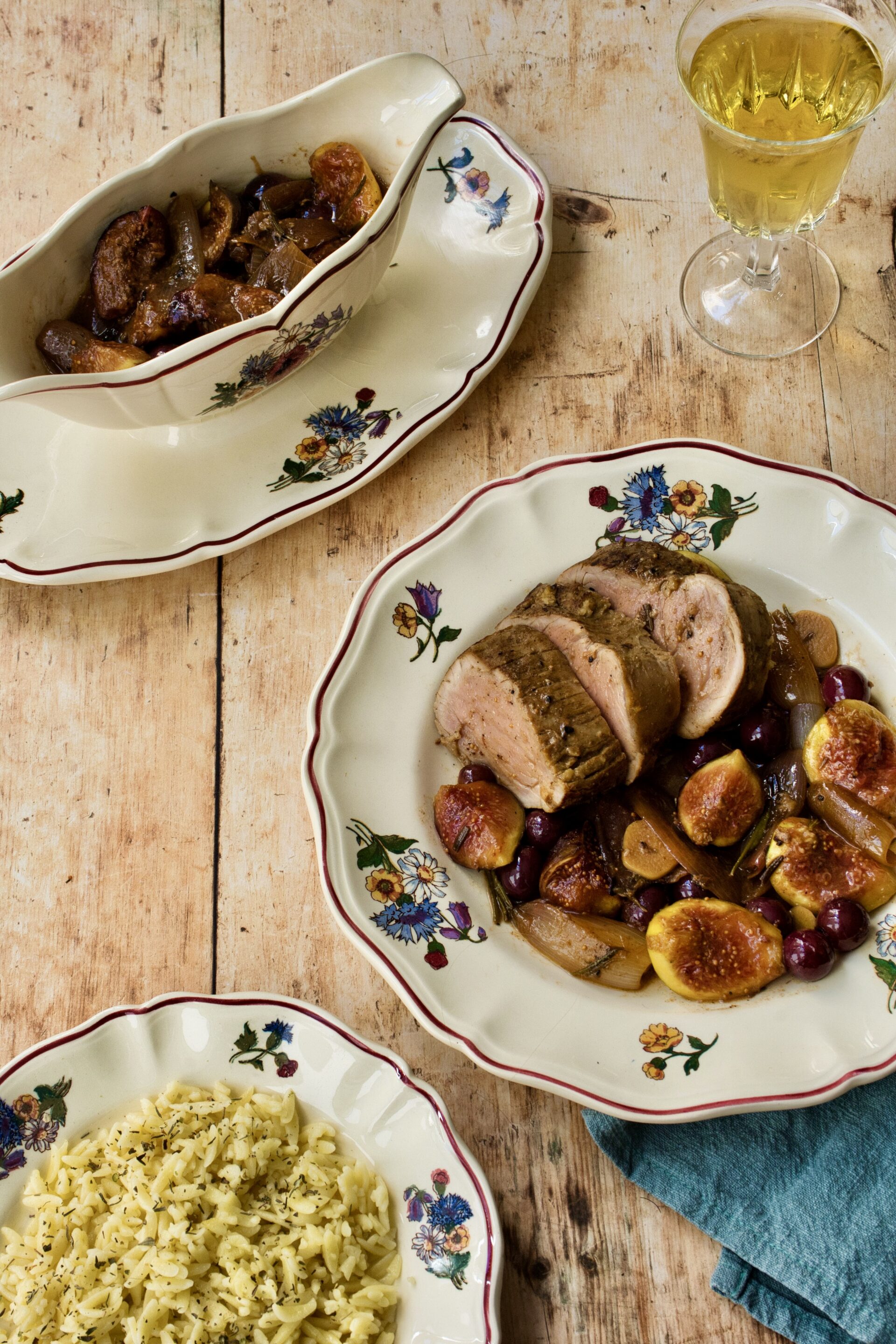
Roasted pork tenderloin with figs, grapes, and shallots is elegant, irresistible, and perfect for late summer and early fall meals.
Imagine This…
You’re seated at a rustic wooden table as the sun begins to set, surrounded by vines heavy with grapes. It’s early evening in September, and the air is warm, tinged with that first whisper of fall.
Someone brings out a platter of roasted pork tenderloin, fragrant, glistening, and nestled on a bed of golden shallots, blistered grapes, and succulent figs. The scent is earthy and warm, the meat perfectly rose-colored and topped with spice-infused juices. You take a bite. It’s tender and rich, sweet and savory… a perfect match for the spectacular landscape around you.
This recipe captures all of that magic in a dish that feels both elegant and entirely doable at home.
An Ode to Roasting Fruit in Savory Dishes
I love adding roasted fruit to meat-based meals. Roasting fruits brings out their natural sweetness. It caramelizes their sugars, transforming them into rich, luscious bursts of flavor that perfectly balance savory dishes.
During the oven-cooking process and when serving, we spoon the juices of the fruits, combined with a delicious white wine, onto the meat. This helps keep the pork moist and allows it to absorb all those wonderful flavors.
A Closer Look at the Ingredients
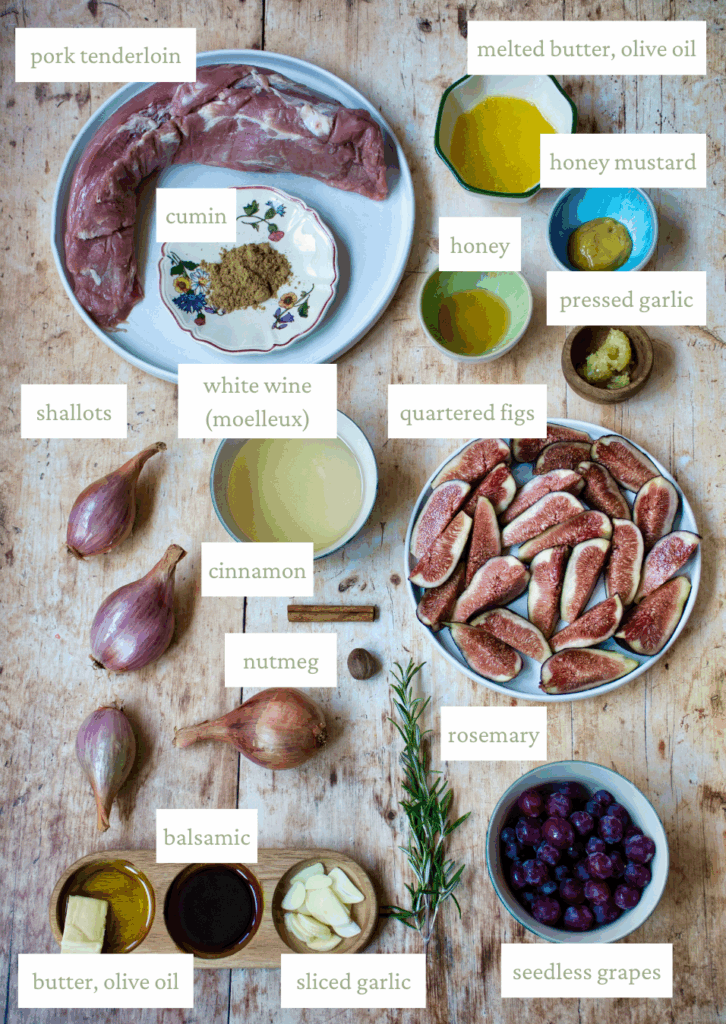
For the pork and marinade
- Pork tenderloin: One large pork tenderloin (1⅓ – 1¾ lbs / 600–800 g). This lean, mild cut cooks quickly and remains tender and juicy. It feels elegant and is fuss-free.
If you are a pork tenderloin fan, you might also love my Best Pork Tenderloin with Apple, Sweet Potatoes, and Carrots. - Honey: Adds subtle sweetness and helps the tenderloin caramelize beautifully in the pan.
- Honey mustard: Brings gentle tang and depth to the marinade. You can substitute with any warm-flavored mustard. Avoid a very spicy variety that could overpower the dish.
- Ground cumin: Adds earthy, aromatic warmth that complements both the savory pork and the natural sweetness of the fruit.
- Unsalted butter & olive oil: This combination gives the best of both worlds: butter adds richness and flavor, while olive oil raises the smoke point to prevent burning during searing.
- Garlic (pressed): Pressing garlic releases more of its flavor than chopping, creating a stronger aromatic base. Pressing also produces a fine paste that clings easily to the pork.
- Salt & freshly ground black pepper: Season according to your preferences. Sufficiently salting the meat is important because it enhances flavor, tenderizes the pork, and helps it retain moisture, resulting in a juicier, more flavorful dish. I like adding a few turns of black pepper to balance the sweetness of the dish.
Produce
- Fresh figs: Sweet and jammy figs are such a treat. Fig season peaks from late summer to early fall, but if you’re making this outside of that window, frozen figs work beautifully too.
- Shallots: Halved and seared first to develop a golden crust and unlock their natural sweetness, then gently braised in wine until meltingly tender.
- Grapes: Red or green seedless grapes both work. They create little bursts of juicy sweetness in the sauce.
Aromatics, spices & cooking liquids
- Garlic (thinly sliced): Sliced garlic imparts a delicate flavor in the sauce.
- Fresh rosemary: A sprig infuses piney freshness. You can substitute with fresh thyme in a pinch.
- Fresh sage: An optional addition for another layer of warmth and nutty flavor.
- Cinnamon stick (about 2½–3 inches / 6–8 cm): Whole cinnamon imparts gentle warmth without overwhelming the dish. If using a larger stick, you can remove it partway through cooking.
- Grated nutmeg: Using a touch of freshly grated nutmeg gives your sauce a subtle lift. I much prefer fresh nutmeg to pre-ground nutmeg.
- Moelleux white wine: This slightly sweet wine ties the whole dish together, creating a luxurious, rounded flavor. A dry white would leave the sauce sharper and more acidic. I don’t recommend “cooking wine” either. Its flat, slightly briny taste can throw off the sauce’s delicate balance. This dish deserves to be made with a wine you’d happily drink alongside it. More on this choice below.
- Balsamic vinegar: A touch of acidity to lift and deepen the flavors of the sauce.
- Butter & olive oil: Used to sear the pork and shallots, helping them form beautiful, golden crusts before slow cooking in the oven.
Vin Moelleux and Why It’s Perfect for Cooking This Pork Tenderloin with Figs, Grapes, and Shallots
When making this dish, choosing the right wine to cook with makes all the difference. While dry white wines can work in a pinch, they don’t bring the same depth and richness. Vin moelleux, a lightly sweet French white wine, is the best choice because it adds just the right touch of sweetness balanced by crisp acidity. Plus, if you serve yourself a glass while enjoying this recipe (like me!), you will appreciate its delightful, velvety texture.
The vin moelleux I use is a white wine from Southwest France made from Sauvignon Blanc and Sémillon. It has a bright golden hue, with floral notes and aromas of mango, peach, and pineapple. It’s balanced, refreshing, and pairs beautifully with the fruit and spices in the dish, making each bite feel layered, vibrant, and luxurious.
Some common examples of moelleux wines: Vouvray Moelleux (Loire Valley), Jurançon Moelleux (Southwest France), Alsace Pinot Gris Moelleux (Eastern France). A Sauternes or a sweeter-style Riesling works too, even if they’re technically more on the dessert wine side
For the Curious: What Exactly Is a Vin Moelleux?
When we say “sweet wine,” that can mean a lot of things, from just lightly sweet to syrupy dessert wines. That’s why it’s helpful to understand how wines are categorized by their residual sugar.
Let’s break it down:
- Vins secs (dry wines): less than 4 grams of residual sugar per liter
- Vins demi-secs (off-dry wines): between 4–12 grams of residual sugar per liter
- Vins moelleux (medium-sweet wines): between 12–45 grams of residual sugar per liter
- Vins liquoreux (sweet dessert wines): more than 45 grams of residual sugar per liter
And here’s a myth worth busting: residual sugar refers to the sugars naturally present in grape must (le moût de raisin) that aren’t transformed into alcohol by yeast during fermentation. In other words, sweet wines aren’t made by dumping sugar into the wine; they’re crafted through specific winemaking methods that allow sugar to remain in the final wine.
Also, for all your vin moelleux drinking needs: serve it slightly chilled, around 48–50°F (9–10°C), just a bit cooler than dry white wine. And enjoy it young (within 3–5 years).
How to Make My Pork Tenderloin with Figs, Grapes, and Shallots (Plus Tips and Tricks)
Marinate the pork
Mix together all the ingredients for the marinade. I don’t recommend reducing the salt, as the quantity is moderate and necessary to enhance the flavor and juiciness. Pat the pork dry. Using half of the marinade, coat the pork tenderloin evenly on all sides. Reserve the other half for brushing on later. Let the pork marinate in the fridge for at least 1 hour and up to 24 hours for maximum flavor.
Bring the pork to temperature and preheat the oven
Remove the pork from the fridge about 30 minutes before cooking to help ensure it’s juicy, tender, and evenly cooked. Once you’re ready to start cooking, preheat your oven to 350°F (180°C) for conventional heat, or 325°F (165°C) if you’re using convection (fan). You will need a large Dutch oven or braising dish with a lid, that can safely be used on the stove-top and in the oven.
Sear the pork
If your pork looks moist, gently pat it dry with paper towels to encourage better searing (wet surfaces cause steaming instead of searing).
Before adding the pork, heat the butter and olive oil over medium to medium-high heat until hot and shimmering—but not smoking. If the oil isn’t hot enough, you’ll get less browning and flavor development. Plus, hot oil helps prevent the pork from sticking to the pan.
Add the marinated pork to the pan and sear until browned on all sides, adjusting the heat as needed. Properly searing pork tenderloin creates a flavorful crust. It’s important not to move the pork too much; place it in the pan and let it be for 2–3 minutes on the first side. When a crust forms, the meat will naturally release from the pan. If it sticks, it’s not ready yet.
Use tongs to turn the tenderloin and sear the remaining sides for 1–2 minutes each. When finished, set the pork aside on a plate, leaving the oil and fond (aka the browned bits that stick to the pan) for the next steps.
Turn off the heat until you’re ready for the next step. If the pan sits too long with just hot oil and no food, especially at medium-high heat, the oil can start to smoke, splatter, or even burn.
Sear the shallots
Add the rosemary sprig and cinnamon stick to the pan.
Place the shallots in the hot oil cut side down and let them sear undisturbed for a few minutes on medium heat. This stillness is crucial: it encourages the Maillard reaction, creating a golden crust and building flavorful fond. Moving the shallots too soon interrupts this process and reduces flavor development.
Once the first side is golden, stir the shallots occasionally for about 5 minutes, letting the layers separate and soften. Most of the cooking happens here – the oven will gently finish them later. Add a touch more olive oil if the pan dries up.
Add the garlic and deglaze
Add thinly sliced garlic and roughly torn sage leaves, cooking for 1-2 minutes until fragrant. Sage and garlic burn quickly and turn bitter, so keep them moving around the pan. Deglaze the pan with balsamic vinegar and white wine for a minute, scraping up the fond to incorporate all those deep, caramelized flavors back into the sauce. Simmer for 2 minutes.
Add the grapes and transfer to the oven
Remove the pan from the heat. Add the grapes, a pinch of freshly grated nutmeg, and salt and pepper to taste. Stir to combine.
The grapes and shallots will soften and release their natural sugars as they cook in the oven. Cover the pan and place it in the lower-middle of your oven to cook for about 10 minutes. If your shallots and grapes are large, you can add an extra 5 minutes to the cook time. Covering is important at every oven step to trap steam and encourage gentle cooking.
Add the pork and the rest of the marinade
Remove the pan from the oven.
If you are using a large cinnamon stick, you may want to remove it either at this step or the next one, depending on your sensitivity to cinnamon. I use a small stick and leave it in throughout the whole cooking process.
Place the marinated pork tenderloin on top of the grape and shallot mixture. Spoon the juices over the pork and brush it with the rest of the reserved marinade. Cover the pan again and return it to the oven covered for another 10 minutes.
Add figs and finish cooking
After this, remove the pan and add fresh figs on top, stirring carefully to combine. Spoon more of the cooking juices over everything, then cover and return the pan to the oven for 10–15 minutes more. You can start checking doneness after about 8 minutes, if you like your pork pink. The exact cooking time will depend on the size of your pork and your particular oven.
The figs soften nicely in this time, without turning completely mushy. Some figs may loose their form (especially if you’re using frozen figs) – don’t worry, they’ll just make your sauce even more delicious.
Rest the meat
For slightly pink meat, take the pork out of the oven when it reaches an internal temperature of about 130°F (54°C). I highly recommend using a meat thermometer to nail the doneness every time. Keep it covered on your countertop for 5-10 minutes. This resting time allows the juices, which get pushed toward the center during cooking, to redistribute evenly throughout the meat. If you cut it too soon, those flavorful juices will spill out, leaving the pork drier.
If your pork is a little too pink for your taste after slicing, simply return it to the pan with the sauce, cover, and continue cooking in the oven until it reaches your desired doneness.
Serve and enjoy!
Remove the cinnamon stick before serving. This dish pairs beautifully with sautéed baby potatoes tossed with thyme.
Pork Tenderloin with Figs, Grapes, and Shallots
Equipment
- Dutch oven or braising pan with oven-proof lid
Ingredients
Marinade
- 1⅓-1¾ lbs pork tenderloin (600-800 g)
- 2 tsp honey
- 2 tsp honey mustard
- 2 tsp pressed garlic (2-3 big cloves)
- 2 tsp ground cumin
- ½ tsp kosher salt
- generous black pepper
- 2 Tbl melted butter (28 g)
- 2 Tbl olive oil
The Rest of the Ingredients
- 1 Tbl butter (14g)
- 1 Tbl olive oil
- 1 twig of fresh rosemary
- 1 cinnamon stick (2½-3 inches or 6-8 cm)
- 4 medium shallots (halved length-wise)
- 2 large garlic cloves (sliced)
- 3 fresh sage leaves (optional, roughly torn)
- 1 Tbl balsamic vinegar
- 1 cup French moelleux white wine (see description above) (235 ml)
- 1 cup seedless red grapes (150 g)
- A pinch of freshly grated nutmeg
- salt and pepper to taste
- 6 fresh figs (quartered)
Instructions
- Marinate the pork: Mix marinade ingredients. Pat pork dry, Coat pork with half the marinade, reserve the rest. Marinate in fridge for at least 2 hours and up to 24 hours for maximum flavor.
- Preheat: Remove pork from fridge 30 min before cooking. Preheat oven to 350°F (180°C) conventional or 325°F (165°C) convection (fan).
- Sear pork: Lightly pat pork dry. Heat butter & olive oil on medium/medium-high until shimmering but not smoking. Sear pork on all sides until browned and a crust forms, about 2 minutes per side. Remove pork and set aside.
- Sear shallots: Add rosemary and cinnamon to pan on medium heat. Place halved shallots cut-side down; cook undisturbed until golden. Then mix occasionally for 5 minutes, letting the layers separate, soften, and brown.
- Add garlic and deglaze: Add sliced garlic and sage, cook 1–2 min, stirring frequently. Deglaze pan with balsamic vinegar and white wine, scraping up the brown bits. Simmer for 2 minutes.
- Add grapes : Remove from heat. Add grapes, a pinch of freshly grated nutmeg, and salt and pepper to taste. Stir to combine. Cover and roast in oven 10–15 min, depending on the size of your grapes and shallots.
- Add pork and marinade: Remove pan from oven. Place pork on top, brush with reserved marinade, and spoon the sauce on top. Cover and return to oven for 10 min.
- Add figs and finish cooking: Add fresh figs and stir carefully to combine. Spoon juices over everything. Cover and roast 8–15 min more, or until the pork reaches an internal temperature of 130°F (54°C). Keep in mind that the pork will gently finish cooking after you take it out. Exact cooking times depend on your specific oven and pork size.
- Rest meat: Rest covered on your countertop for 5–10 min before thickly slicing. If your pork is a little too pink for your taste after cutting, simply return it to the pan with the sauce, cover, and continue cooking in the oven until it reaches your desired doneness.
- Serve and enjoy!: Remove cinnamon stick and rosemary twig. Serve with sautéed baby potatoes, orzo or farro.
Did you make this recipe?
Please let me know how it turned out for you! Leave a comment below and tag @jessicahomekitchen on Instagram.
If you liked this recipe, you should try my Pork Tenderloin with Apple, Sweet Potatoes, and Carrots, packed with a variety of cozy spices and herbs like cinnamon and fresh thyme!
Yum! The figs really add sweetness and flavors to the pork, combined with grapes and a good white wine, this is a perfect dinner meal 😀
I’m so happy that you enjoyed your meal! Fig season is truly so wonderful!
Really enjoyed the sauce with shallots (good prompt to cook them until softened), grapes, and wine. I used a semi-sweet Riesling. For those who like their pork more pink, I suggest probing after 15 minutes. I often skimp on salt in marinades, but would not recommend doing so here until you give it a good taste, as the salt really brings out the flavor of the pork. Definitely making this again.
Thanks for trying this recipe! I’m so happy you enjoyed it. These are great tips. It’s definitely a good idea to start checking the pork after 15 minutes, especially if you are using a convection oven.